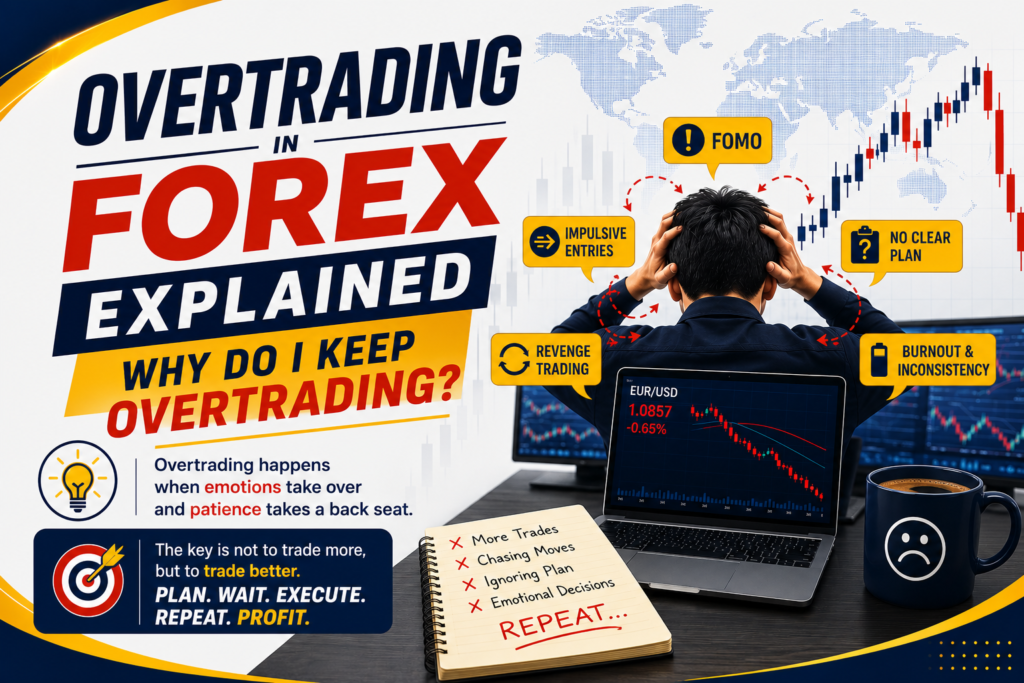
Have you ever told yourself, “Just one more trade,” only to end the day with more losses than expected?
If so, you’re not alone. Many beginner traders struggle with Overtrading in Forex without realizing it’s happening. Instead of waiting for quality trading opportunities, they continue entering trades simply because the market is moving or because they want to recover previous losses.
Learning to recognize and control overtrading is an important step toward becoming a more disciplined and consistent trader.
What Is Overtrading in Forex?
Overtrading in Forex happens when a trader places more trades than necessary, often without following a clear trading plan.
Instead of waiting for high-probability setups, traders begin entering positions based on emotions such as excitement, fear, boredom, or frustration.
The result is usually unnecessary risk, inconsistent decision-making, and higher trading costs.
Why Do Traders Overtrade?
There isn’t just one reason why traders overtrade. In many cases, emotions play a bigger role than strategy.
Some common reasons include:
- Feeling the need to trade every market movement.
- Trying to recover losses quickly (revenge trading).
- Becoming overconfident after several winning trades.
- Fear of missing out (FOMO).
- Boredom while watching the charts.
- Believing that more trades automatically mean more profits.
Unfortunately, more trades do not always lead to better results. In many cases, they increase the likelihood of making emotional decisions.
Signs You May Be Overtrading
You may be experiencing Overtrading in Forex if you:
- Open trades without waiting for confirmation.
- Ignore your trading plan.
- Increase your lot size after a loss.
- Enter trades simply because the market is moving.
- Continue trading after reaching your daily loss limit.
- Feel stressed or emotionally exhausted after a trading session.
Recognizing these habits early can help prevent unnecessary losses.
How Overtrading Can Affect Your Performance
Overtrading doesn’t just affect your account balance, it also affects your mindset.
It can lead to:
- Poor risk management.
- Emotional decision-making.
- Higher trading costs through spreads and commissions.
- Larger drawdowns.
- Reduced confidence in your trading strategy.
- Mental fatigue from constantly watching the market.
Successful traders understand that consistency comes from following a plan, not from taking as many trades as possible.
How to Avoid Overtrading
The good news is that Overtrading in Forex is a habit that can be improved.
Here are some practical ways to stay disciplined:
1. Create a Trading Plan
Know exactly what conditions must be present before entering a trade.
2. Set a Daily Trade Limit
Decide in advance how many trades you will take each day. Once you’ve reached your limit, step away from the charts.
3. Accept That You Can’t Catch Every Opportunity
The forex market offers new opportunities every trading day. Missing one trade doesn’t mean you’ve missed your chance to succeed.
4. Follow Your Risk Management Rules
Never increase your lot size simply to recover previous losses. Every trade should follow the same risk management principles.
5. Keep a Trading Journal
Recording every trade helps you identify patterns and determine whether emotions are influencing your decisions.
Quality Over Quantity
Many beginners believe that successful traders spend the entire day buying and selling.
In reality, experienced traders often wait patiently for only a few high-quality opportunities that match their strategy.
Sometimes the best trading decision is choosing not to trade at all.
Remember, successful trading isn’t measured by the number of trades you place—it’s measured by the quality of your decisions and your ability to protect your capital.
Learn Forex Trading With Legendary Trading Academy
At Legendary Trading Academy, we teach students that discipline is just as important as technical analysis.
Our programs help aspiring traders understand Overtrading in Forex, risk management, trading psychology, and the importance of following a structured trading plan. By developing patience and discipline, beginners can build habits that support long-term consistency instead of emotional decision-making.
Whether you’re just beginning your trading journey or working to improve your discipline, learning to avoid overtrading is an important step toward becoming a more confident and responsible trader.
👉 Learn more about our programs:
https://www.legendarytradingacademy.com
📩 Follow Lady Denily for updates and educational content:
https://www.facebook.com/ladydenilyofficial/
📩 Follow Legendary Trading Academy for updates and educational content:
https://www.facebook.com/legendarycircleacademy