
For many Filipinos, learning Forex trading may seem difficult when you already have a full-time career, family responsibilities, and a busy daily schedule. But Forex Trading for Employees is possible when approached with realistic expectations, proper time management, structured education, and discipline.
The key is understanding that learning Forex does not mean sitting in front of a chart all day.
You can build your knowledge gradually, study during your available time, practice your analysis, and develop responsible trading habits without immediately making Forex your primary source of income.
Here are 7 ways Filipinos can learn Forex while working a full-time job.
1. Create a Realistic Forex Learning Schedule
The first step is to understand how much time you actually have.
If you work from 8 AM to 5 PM, you may not have several hours every day to study charts. That’s okay.
Instead, create a realistic schedule that you can consistently follow.
For example:
- Before work: Review important market news or economic events.
- After work: Spend 30–60 minutes studying Forex concepts.
- Weekends: Review charts, study previous market movements, and update your trading journal.
You don’t need to study for five hours every day.
Even a small amount of consistent learning can be more useful than studying intensely for one day and stopping for several weeks.
The goal is to make Forex education part of your routine without allowing it to interfere with your career and personal responsibilities.
2. Understand the Forex Market Sessions
One advantage of the Forex market is that trading activity happens across different global financial centers.
The major market sessions include Sydney, Tokyo, London, and New York.
For Filipino employees, understanding these sessions can help you determine which periods are more practical to study or observe.
For example, someone working during the daytime may find certain market sessions more accessible after work.
However, having access to a particular session doesn’t mean you need to trade every session.
The important thing is to understand how market activity changes throughout the day and determine what fits your schedule.
Remember: your schedule should help shape your trading approach—not the other way around.
3. Focus on Education Before Live Trading
One of the biggest mistakes beginners can make is thinking that learning Forex means immediately opening a live account.
It doesn’t.
Learning should come first.
You can begin by studying:
- Forex fundamentals
- Currency pairs
- Candlestick patterns
- Market structure
- Support and resistance
- Technical analysis
- Fundamental analysis
- Risk management
- Trading psychology
- Trade planning
You can also practice analyzing historical charts and observing how price behaves around important levels.
This gives you an opportunity to build knowledge before putting real money at risk.
For employees, this is particularly important because your salary may already be supporting your daily expenses and financial responsibilities.
Trading should never be treated as a shortcut to replacing your regular income.
4. Learn Without Watching Charts All Day
Another misconception about Forex is that you need to monitor charts constantly.
The amount of screen time depends on the trading style and strategy being used.
Some approaches require more frequent monitoring, while others may involve observing specific market conditions or timeframes.
As an employee, you should understand the difference between being available to learn and being available to trade every moment.
You can use your free time to:
- Review previous trades
- Study market structure
- Analyze historical charts
- Read educational materials
- Watch recorded lessons
- Practice identifying potential setups
- Maintain a trading journal
This can make the learning process more manageable for people with demanding work schedules.
5. Make Risk Management Part of Your Learning
Learning how to identify a potential trade is only one part of Forex education.
Understanding risk is equally important.
Before entering any trade, traders should understand how much they are willing to risk and how that risk fits into their overall financial situation.
Important concepts include:
- Position sizing
- Stop-loss
- Risk per trade
- Risk-to-reward ratio
- Leverage
- Drawdown
- Account exposure
For example, an employee should never feel pressured to risk money that is needed for rent, food, tuition, bills, debt payments, or emergency expenses.
A trading plan should help define your risk before you enter a trade.
This can also reduce emotional decision-making when the market moves unexpectedly.
If you want to understand this further, you can also read our guides on Stop Loss in Forex and Risk-Reward Ratio in Forex.
6. Develop Trading Discipline and Psychology
Having a full-time job can already be stressful.
Deadlines, meetings, performance targets, commuting, and personal responsibilities can affect your emotions.
Adding trading decisions to that environment can create additional pressure.
This is why trading psychology should be part of your education.
Employees who are learning Forex should become aware of behaviors such as:
FOMO – entering a trade because you are afraid of missing a move.
Revenge trading – taking another trade simply because you want to recover a previous loss.
Overtrading – opening too many trades without a clear setup.
Fear – closing a position too quickly because of anxiety.
Greed – taking unnecessary risks because you want a bigger result.
Developing discipline means following your trading plan even when emotions are telling you to do something different.
You can learn more about this in our article on Trading Emotions.
7. Use Your Weekends for Review and Improvement
Your weekends can become valuable learning time.
Instead of trying to trade constantly during the week, use part of your weekend to review what happened in the market.
You can ask:
- What did the market do this week?
- Which major economic events affected price?
- What setups appeared?
- What mistakes did I make?
- Did I follow my trading plan?
- What can I improve next week?
This is where a trading journal can become useful.
A journal allows you to document your decisions and identify patterns in your behavior.
Over time, you may discover that you tend to enter trades too early, ignore your stop-loss, trade when you’re tired, or make decisions based on emotions.
You can learn more about keeping a proper journal in our article on Trading Journal.
Can Employees Learn Forex Without Quitting Their Jobs?
Absolutely—but learning Forex should not automatically mean leaving your career.
For many Filipinos, a full-time job remains an important source of financial stability.
Learning Forex can instead be approached as a skill that you develop alongside your existing responsibilities.
Think of it this way:
Work → Earn → Learn → Practice → Review → Improve
You don’t need to rush the process.
The objective is to develop your knowledge and decision-making ability over time.
Why Structured Forex Education Can Help Employees
Learning everything alone can sometimes become overwhelming.
There are thousands of Forex videos, strategies, indicators, opinions, and trading concepts available online.
A beginner can easily jump from one strategy to another without understanding the fundamentals.
Structured education can provide a clearer learning path.
Instead of randomly consuming information, students can work through concepts in a logical order.
For example:
Forex Fundamentals → Technical Analysis → Market Structure → Risk Management → Trading Psychology → Strategy → Practice
This approach can help employees use their limited learning time more effectively.
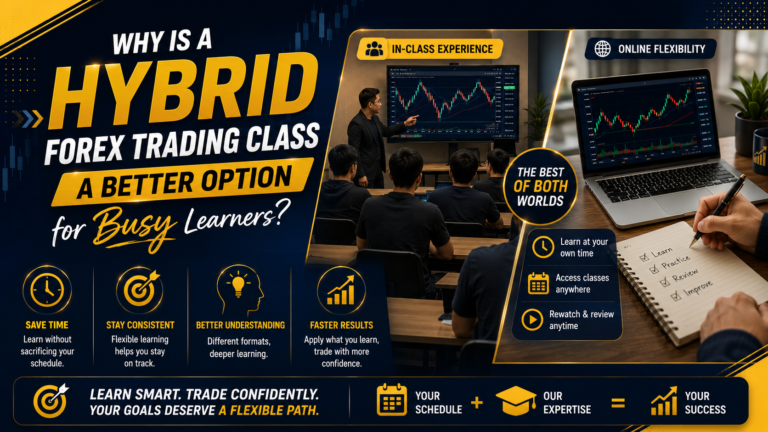
Flexible Learning Can Make a Difference
Not every student has the same schedule.
Some Filipinos work traditional 8-to-5 jobs.
Others work night shifts.
Some are OFWs.
Others are entrepreneurs, parents, or students.
This is why flexibility can be important when choosing a Forex education program.
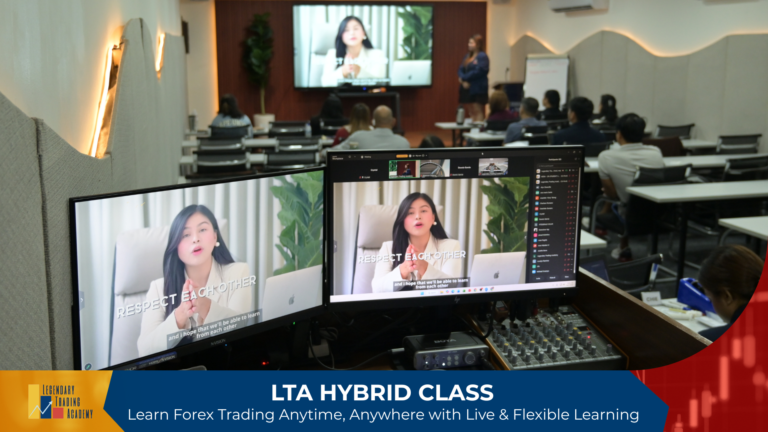
Online learning, live sessions, recorded materials, practical discussions, and community support can provide different ways for students to continue learning based on their circumstances.
At Legendary Trading Academy, our goal is to provide structured Forex education while helping students develop a stronger understanding of financial literacy and responsible trading.
Can Forex Become a Side Skill?
Forex can be studied as a financial skill, but it should not be viewed as guaranteed side income.
There is a major difference between:
“I want to learn Forex.”
and
“I need Forex to replace my salary.”
The first focuses on education.
The second can create unnecessary financial and emotional pressure.
Trading involves uncertainty. Some trades can result in losses, and no strategy can guarantee consistent profits.
For employees, maintaining realistic expectations is especially important.
Your job, savings, emergency fund, and financial responsibilities should not be placed at unnecessary risk because of the desire to make quick money from trading.
What Should Employees Look for in a Forex Academy?
If you’re considering joining a Forex academy, don’t choose based only on promises of profits.
Look for an educational program that teaches you how the market works.
Consider whether the academy covers:
- Forex fundamentals
- Technical analysis
- Fundamental analysis
- Market structure
- Risk management
- Trading psychology
- Trading discipline
- Practical market analysis
- Continuous learning
You should also look for transparency and realistic expectations.
A responsible educational environment should acknowledge that trading involves risk rather than presenting Forex as easy or guaranteed income.
Learn Forex Trading With Legendary Trading Academy
At Legendary Trading Academy, we believe that education should go beyond simply telling people when to buy or sell.
Our goal is to help Filipinos develop knowledge, financial awareness, discipline, and responsible decision-making.
Whether you’re a full-time employee, OFW, entrepreneur, student, parent, or someone simply curious about Forex, learning can start with understanding the fundamentals.
You don’t need to rush.
You don’t need to watch charts all day.
And you don’t need to risk money before you understand what you’re doing.
Start with education.
Build your foundation.
Practice your skills.
Understand the risks.
Then continue improving.
Beyond Trading: Building Financial Literacy
Forex education is only one part of a bigger financial literacy journey.
At LTA, our mission is:
IMPACTING 1 MILLION FILIPINO LIVES THROUGH FINANCIAL LITERACY.
We believe Filipinos should have opportunities to learn more about financial decisions, risk, and responsible participation in financial markets.
Our goal is not simply to create people who know how to read a chart.
It is to encourage a stronger financial mindset.
Ready to Start Learning?
If you’re a Filipino employee wondering whether you can learn Forex while maintaining your full-time job, the answer is yes—but start with realistic expectations.
You can begin with a few hours of learning each week.
Study the fundamentals.
Understand the market.
Practice your analysis.
Learn risk management.
Develop discipline.
And most importantly, give yourself time to learn.
Your Forex journey doesn’t have to happen overnight.
Start with knowledge before taking action.
👉 Learn more about Legendary Trading Academy: https://legendarytradingacademy.com/
📘 Follow Legendary Trading Academy: https://www.facebook.com/legendarycircleacademy/
👩💼 Follow Lady Denily: https://www.facebook.com/ladydenilyofficial/
Final Reminder
Forex trading involves significant risk and may not be suitable for everyone. Trading is not guaranteed income, and no strategy, mentor, signal, or educational program can guarantee profits.
Do not trade with money needed for essential living expenses, debt payments, emergency needs, or other financial obligations.
Legendary Trading Academy provides education only. We do not provide investment advice, manage funds, or guarantee profits.
This article is for educational purposes only and should not be considered financial or investment advice.