
01
PRACTICAL MARKET LEARNING
Study the Market.
Understand the Process.
Two focused learning experiences help students examine how market analysis is developed and how copy-trading systems operate, including the risks, limitations, and decisions involved.
DAILY MARKET ANALYSIS
Learn How Traders Analyze the Market
Gold Market Analysis Sessions
Instructor-led discussions turn the chart into a learning environment: students observe the evidence, examine possible scenarios, and consider risk as conditions change.
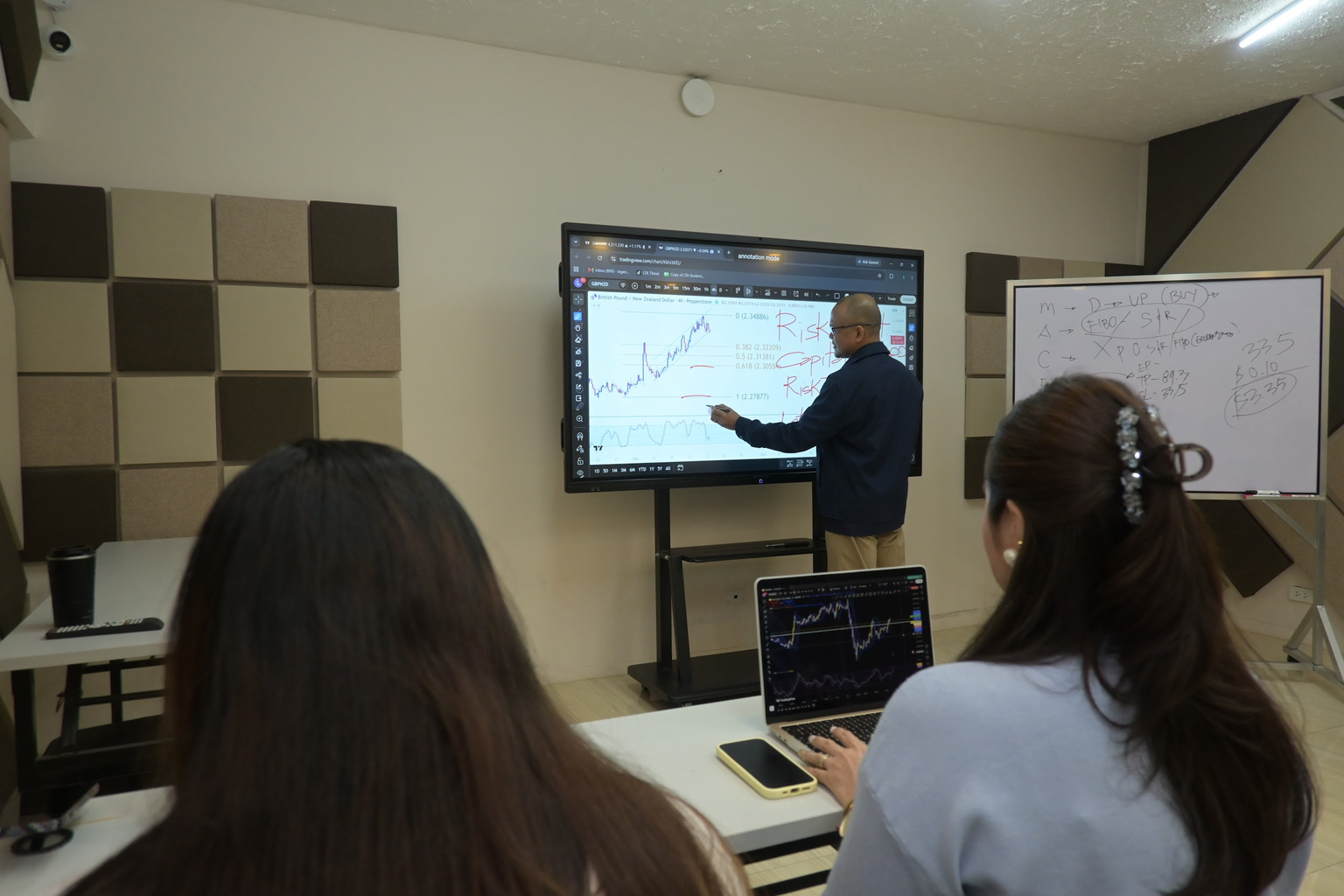
Study XAU/USD market behavior through instructor-led analysis and educational market discussions.
Learn how market scenarios may be evaluated using technical analysis, market structure, risk considerations, and changing market conditions.
Illustrative setups may be discussed for educational purposes, but every learner remains responsible for their own decisions.
WHAT TRADERS EVALUATE
A Chart Is Evidence.
The Lesson Is the Process.
Each session can be approached through four connected lenses. None removes uncertainty; together they support a more structured discussion.
02
Market structure
Observe how price may move through trends, ranges, support, and resistance.03
Risk considerations
Discuss exposure, invalidation, uncertainty, and capital protection before any decision.04
Changing conditions
Review how context may shift as sessions, news, liquidity, and volatility change.COPY TRADING EDUCATION
Understanding
Copy Trading
Copy trading allows one trading account to replicate activity from another strategy or trader—but convenience does not remove risk.
At LTA, learners can study how copy-trading models work, including:
Selection risk
A strategy can look suitable on limited history while carrying risks that are not immediately visible.
Drawdowns
Copied activity can lose value. Learners should understand both the size and duration of declines.
Fees
Platform, broker, spread, and service costs can affect the result received by an account.
Execution differences
Timing, price, liquidity, and account settings can cause copied results to differ from the source.
Historical performance limitations
Previous results describe the past and cannot establish what will happen next.
Reliance on another trader
Following another person can reduce visibility and control over the reasoning behind a decision.
Risk-management considerations
Sizing, limits, monitoring, and the ability to stop participation remain essential.
The goal is to help learners understand the mechanism and its risks before making independent decisions.
Learn How Copy Trading WorksTHE MECHANISM
Follow the Activity.
Locate the Risk.
Explore each part of the model. The diagram shows the relationship between a source, a copying mechanism, and a learner’s own account. It does not represent a promised result.
01 / STRATEGY SOURCE
Activity begins with another strategy or trader.
Selection matters because behavior, exposure, and performance can change over time.
PRACTICE WITH PURPOSE
Build the Process
Before the Position.
Continue through LTA’s structured learning path to develop stronger foundations in analysis, risk management, psychology, and independent decision-making.
Explore the Learning Path